Why Precision Machining Is Key to Reducing Manufacturing Errors?

Time:2026-06-10 Author:Oliver
0%

In the realm of manufacturing, precision machining plays a crucial role. It significantly impacts product quality and operational efficiency. Companies striving for excellence must understand why precision machining reduces manufacturing errors. This technique allows for tight tolerances, ensuring parts fit together seamlessly.

By employing advanced technology and skilled operators, manufacturers can reduce inconsistencies in production. However, reliance on precision machining exposes vulnerabilities too. Overlooking small errors in the setup process can lead to substantial defects. Therefore, precision comes with the necessity for continuous monitoring.

Investing in precision machining means embracing both its benefits and challenges. Businesses must recognize the importance of training and quality control to mitigate risks. Familiarity with the machinery and processes can enhance reliability. Understanding these dynamics is key to minimizing errors in manufacturing, thus paving the way for greater success.
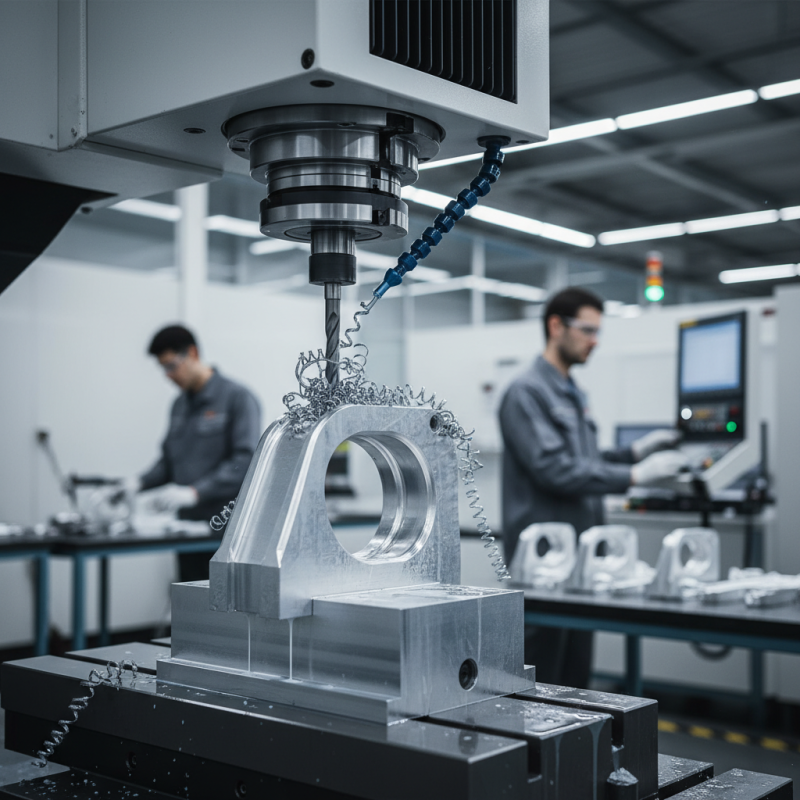
Why Precision Machining Is Key to Reducing Manufacturing Errors?

Understanding Precision Machining and Its Role in Manufacturing

Precision machining plays a critical role in the modern manufacturing landscape. This process ensures that components are crafted with remarkable accuracy. According to a report by the National Institute of Standards and Technology, precision machining can reduce production errors by up to 30%. Maintaining this level of precision is not just beneficial; it is essential for product reliability and performance.

Understanding the intricacies of precision machining reveals its significance. This technique often involves CNC machines, which can produce parts with tolerances as tight as 0.0001 inches. Such accuracy is vital in industries like aerospace and medical devices, where errors can have catastrophic consequences. Failure to implement proper machining techniques can result in costly rework and wasted materials.

However, challenges remain. The complexity of materials used today often complicates machining processes. Variability in raw material quality can lead to inconsistencies, making precision more difficult to achieve. Manufacturers must continuously assess their processes to minimize errors. Addressing these issues requires ongoing training and investment in technology.

Common Manufacturing Errors and Their Impact on Production Quality

Manufacturing errors can severely impact production quality. The National Institute of Standards and Technology (NIST) reports that manufacturing errors can increase costs by 15-20%. This highlights the critical need for precision machining. Even minor deviations in parts can lead to significant issues down the production line. These deviations often result in product recalls and damage to brand reputation.

Common errors include dimensional inaccuracies, surface finish imperfections, and misalignment. A survey conducted by the American Society of Mechanical Engineers (ASME) indicated that 30% of all manufacturing faults arise from such inaccuracies. Projects are delayed, and resources are wasted when errors occur. Companies often struggle to keep production on schedule while rectifying these issues.

Investing in precision machining minimizes these risks. Utilizing advanced technology ensures tighter tolerances and better surface finishes. However, the transition to precision processes can be challenging. Workers need training, and machines require calibration. The costs associated with implementing such changes often create hesitancy. Despite these hurdles, the long-term benefits of fewer errors make precision machining essential in today’s competitive manufacturing landscape.

Why Precision Machining Is Key to Reducing Manufacturing Errors? - Common Manufacturing Errors and Their Impact on Production Quality

Error Type Description Impact on Production Quality Mitigation Strategy
Dimensional Inaccuracy Deviation from specified dimensions. Results in poor fitting parts, increased assembly time, and potential product failure. Implement precision machining techniques and regular calibration of machines.
Surface Finish Defects Improper surface texture leading to rough or uneven surfaces. Affects aesthetic appeal and can reduce product lifespan. Use of advanced cutting tools and techniques to achieve desired finishes.
Material Defects Imperfections within the raw material. Leads to structural weaknesses and reliability issues. Thorough incoming material inspections and sourcing from reputable suppliers.
Tool Wear Deterioration of cutting tools over time. Can cause inconsistent cuts and increased production costs. Regular tool maintenance and timely replacement or sharpening of tools.
Thermal Distortion Changes in dimensions due to heat generated during machining. Can lead to misalignments and dimensional errors post-machining. Utilize cooling methods and adjust machining strategies to minimize heat buildup.

How Precision Machining Enhances Tolerances and Specifications

Precision machining plays a pivotal role in enhancing tolerances and specifications in manufacturing. This process allows for the creation of parts with tolerances as tight as ±0.0001 inches. Such precision is vital in industries like aerospace and medical devices. According to a report from the National Institute of Standards and Technology, precision machining can reduce manufacturing errors by up to 30%. This reduction is crucial for safety-critical applications.

The technology used in precision machining, including CNC (Computer Numerical Control) machines, offers high repeatability. These machines can execute complex designs with impressive accuracy. However, inconsistencies can arise from tool wear or incorrect programming. Companies need to regularly maintain their machinery. Regular audits are essential to ensure that tolerances remain within specified limits.

Moreover, precision machining promotes efficiency and reduces waste. A study by the American Society of Mechanical Engineers highlighted that precision machining could decrease material waste by 20%. This efficiency is not just beneficial economically; it's also essential for sustainability. Yet, achieving this level of precision requires skilled operators and advanced training to minimize human errors. Investing in workforce development is as critical as investing in technology.

Impact of Precision Machining on Manufacturing Errors

Technological Advances in Precision Machining Techniques

Technological advances in precision machining continue to reshape the manufacturing landscape. New techniques enhance accuracy while minimizing errors. For instance, Computer Numerical Control (CNC) machines allow for intricate designs and tighter tolerances. This level of precision is crucial for industries like aerospace and medical devices where even minute errors can lead to significant issues.

Emerging technologies such as additive manufacturing and automation play vital roles too. These methods enable the production of complex parts with reduced waste. However, challenges still exist. Operators must be skilled to manage these sophisticated machines, which can limit productivity. Moreover, integration with traditional methods can introduce complexities. This leaves manufacturers reflecting on how to balance innovation with practical application.

Incorporating advanced machining techniques requires a commitment to ongoing training and adaptation. As technology evolves, so must the workforce’s expertise. Embracing this change may not always be smooth and can bring unexpected hurdles. The quest for precision is ongoing, highlighting the importance of continuous improvement in manufacturing processes.

The Economic Benefits of Reducing Errors through Precision Machining

Precision machining plays a vital role in minimizing manufacturing errors. Research indicates that errors can account for up to 30% of production costs. By employing precision machining techniques, companies can significantly reduce these costs. For instance, a study by the National Institute of Standards and Technology (NIST) found that improving machining accuracy decreased rework and scrap rates by 20%. This not only enhances product quality but also boosts overall efficiency.

Consider the impact of reduced errors on financial performance. Eliminating mistakes can lead to savings of millions annually, depending on production scale. A report from Deloitte highlights that manufacturers who employ precision machining see a return on investment of up to 200% within two years. This transformation allows companies to be more competitive in the market.

Tip: Invest in training for your workforce. Skilled operators can greatly enhance precision machining outcomes. Regularly review machine calibration to maintain the highest standards. Implementing these practices reinforces a culture of quality and leads to continual improvement. Emphasizing these aspects is essential, as overlooking them can lead to detrimental errors and higher operational costs.

FAQS

: What is precision machining?

: Precision machining is a manufacturing process that creates parts with tight tolerances, like ±0.0001 inches.

Why is precision important in certain industries?

It's vital in aerospace and medical devices where small errors can have serious consequences.

How does precision machining reduce manufacturing errors?

It can reduce errors by up to 30%, leading to safer and more reliable products.

What role does CNC technology play in machining?

CNC machines offer high accuracy and repeatability, executing complex designs efficiently.

What challenges do manufacturers face with precision machining?

Tool wear and incorrect programming can lead to inconsistencies, affecting overall quality.

Why is regular maintenance important for machinery?

Scheduled audits and maintenance ensure tolerances remain within specified limits, enhancing production quality.

How does precision machining affect waste reduction?

It can decrease material waste by about 20%, which is economically and environmentally beneficial.

What is required for achieving high levels of precision?

Skilled operators and ongoing training are necessary to minimize human errors and improve outcomes.

Are there challenges in integrating new machining technologies?

Yes, combining new methods with traditional processes can create complexity and uncertainty.

What does the future hold for precision machining?

Continuous improvement is needed, and adapting to new technologies may not always be an easy process.

Conclusion

Precision machining plays a crucial role in the manufacturing process by minimizing errors and enhancing product quality. Understanding the principles of precision machining helps identify common manufacturing errors, such as dimensional inaccuracies and surface imperfections, which can significantly affect production outcomes. By focusing on tight tolerances and strict specifications, precision machining ensures that components fit together perfectly, thereby reducing the likelihood of defects.

Moreover, advancements in precision machining techniques are continually pushing the boundaries of what is possible in manufacturing, leading to greater efficiency and reduced costs. Embracing these technologies not only improves the accuracy of manufacturing processes but also provides substantial economic benefits by decreasing waste and rework. In summary, why precision machining reduces manufacturing errors is evident in its ability to elevate production quality, optimize operational processes, and enhance overall profitability in the industry.

Oliver

Oliver

Oliver is a seasoned marketing professional with a wealth of expertise in driving brand awareness and engagement. With a deep understanding of our company's product offerings, he consistently delivers high-quality content that enriches our professional blog. His insights not only shed light on......