10 Essential Factors to Consider Before Investing in CNC Machines?

Time:2026-06-04 Author:Ethan
0%

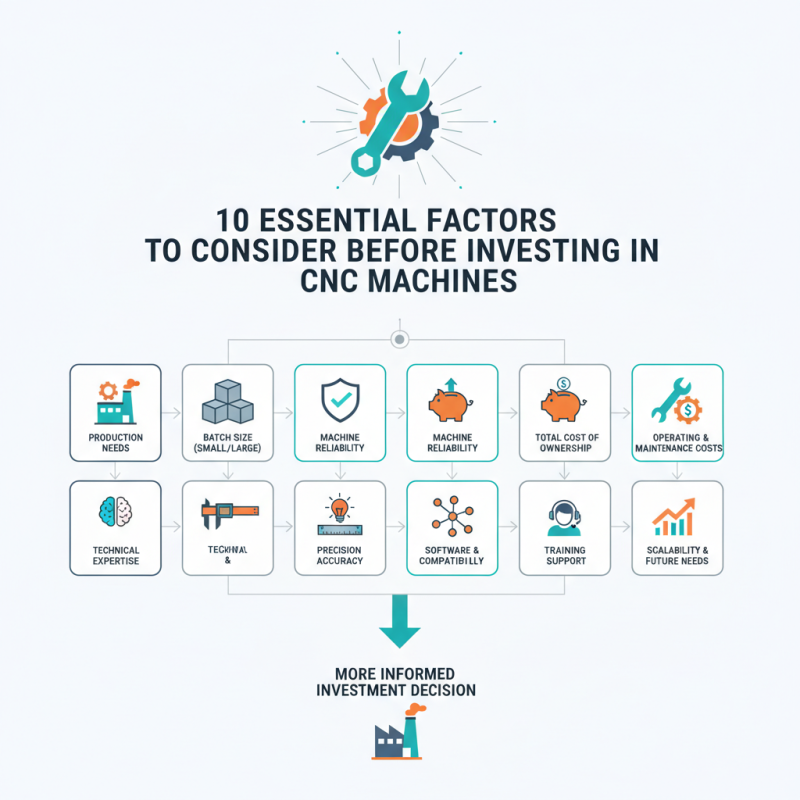
Investing in CNC machines can be a pivotal decision for your business. It promises efficiency, precision, and cost-effectiveness. However, many overlook critical aspects. Understanding what to consider before investing in CNC machines is essential. It goes beyond just price; features, maintenance, and support matter too.

When selecting CNC machines, think about your production needs. Are you focusing on small batches or large-scale production? The machine's capabilities should align with your goals. Reliability is also a key factor; a breakdown can lead to significant losses.

Don’t forget to assess the total cost of ownership. This includes not only the purchase price but also operating costs and maintenance. It’s worth reflecting on whether you have the expertise to operate these machines effectively. Being detailed in your considerations will ultimately lead to a more informed investment decision.
10 Essential Factors to Consider Before Investing in CNC Machines?

Factors Influencing CNC Machine Selection: A Comprehensive Overview

When selecting CNC machines, various critical factors must be evaluated to ensure the right choice. The machine's type plays a significant role. For instance, turning machines are ideal for cylindrical parts, while milling machines excel in flat or complex designs. According to industry reports, 85% of manufacturers prioritize machine versatility for different applications.

Another essential factor is precision. High precision is often crucial in industries such as aerospace or automotive, where tolerances can be as tight as ±0.005 mm. However, obtaining such precision usually demands advanced technology, which can increase costs significantly. It's essential to balance the required precision with the budget constraints, as 40% of businesses report complications from overspending on capabilities they seldom use.

Maintenance and support services are also vital considerations. Many CNC machines require specialized knowledge for upkeep. Reports show that inadequate maintenance can lead to costly downtime—averaging up to 20% in lost productivity. Therefore, evaluating the availability of tech support and training is essential before making an investment. Understanding these factors helps navigate the complexities of CNC machine selection, leading to informed decisions that align with operational goals.

10 Essential Factors to Consider Before Investing in CNC Machines

Factor Description Importance Level
Machine Type Choosing between types such as CNC milling, CNC turning, or CNC laser. High
Material Compatibility Ensure the machine can handle the materials you intend to work with. High
Budget Consider initial purchase cost and ongoing maintenance expenses. Critical
Precision and Accuracy The machine’s ability to maintain tight tolerances in production. Very High
Size and Footprint Ensure the machine fits within your workspace and production line. Medium
Ease of Use User-friendly controls and software can streamline operations. High
Support and Training Check availability of manufacturer training and customer service support. Important
Technology and Features Assess additional features such as automation and advanced features. Medium
Warranty and Guarantees Understand warranty coverage and service guarantees offered. Important
Market Trends Stay aware of industry trends that may influence machine performance and needs. Medium

Understanding CNC Machine Types and Their Specific Applications

When considering CNC machines, it’s crucial to understand the various types and their applications. CNC (Computer Numerical Control) machines include milling machines, lathes, routers, and plasmas. Each type serves unique purposes in manufacturing. Milling machines are excellent for precise cuts in complex shapes. They are commonly used in metalworking and woodworking.

Lathes, on the other hand, excel in shaping cylindrical parts. They are essential in industries producing shafts and other round components. Routers are often used for engraving or cutting softer materials like wood and plastics. These machines provide versatility but may lack the precision of milling machines. Plasma cutting machines are ideal for cutting metal sheets quickly. However, their edge quality might not always meet the high standards required for every project.

Understanding these nuances is vital for effective investment decisions. Choosing the right type impacts overall production efficiency. A machine that seems optimal may not be the best fit if it doesn’t align with specific project requirements. Assessing your needs and available technology is essential. Not every shop has the same demand. Inadequate choices can lead to inefficiencies and wasted resources. Therefore, a clear grasp of machine capabilities can prevent costly mistakes.

Evaluating Financial Implications: Costs and ROI of CNC Machine Investment

Investing in CNC machines requires careful consideration of financial aspects. Evaluating costs and return on investment (ROI) is crucial. Different machines come with varying price tags. A cheaper model may initially seem attractive. Yet, hidden maintenance costs could accumulate. It's wise to calculate potential expenses over time, not just the purchase price.

When assessing ROI, think about production efficiency. A well-chosen CNC machine can drastically reduce labor costs. Consider how it might boost output and quality. Time saved on each part can translate into higher profits. Also, evaluate potential waste reduction. Over the lifespan of the machine, this can lead to significant savings.

Tip: Conduct a cost-benefit analysis before making a decision. Include all possible expenses like maintenance and training. Seek advice from professionals in the field to get insights on expected performance. Regularly review your assumptions. The manufacturing landscape can shift rapidly, affecting your investment's viability. Make adjustments as needed to stay ahead.

Investment Breakdown and ROI Analysis for CNC Machines

Assessing Technical Specifications for Optimal CNC Performance

When considering investing in CNC machines, assessing technical specifications is crucial. Begin with the machine's rigidity and stability. A sturdy frame ensures precision during operations. This can significantly impact product quality. Check the axis movement and speed as well. Different applications require varying speeds. Too fast may lead to errors.

Another key factor is the control system. A user-friendly interface boosts operational efficiency. Modern CNC machines often come with intuitive software for ease of use. However, not all users may find new systems straightforward. Familiarization can be time-consuming. Consider your team's skill level. Training might be necessary for optimal performance.

Lastly, think about the machine’s compatibility with different materials. Some machines excel with aluminum, while others are better for wood or plastics. Ensure that the machine meets your specific needs. If you anticipate future material expansion, select a versatile model. This flexibility can save you money down the line. Each aspect plays a role in your investment decision. Weigh these factors carefully to enhance your CNC experience.

Importance of Supplier Reputation and Service Support in CNC Purchases

When considering CNC machine investments, supplier reputation is paramount. A reliable supplier often indicates quality machinery. However, not all reputable suppliers offer comprehensive service support. It's crucial to evaluate how a supplier addresses customer issues. Do they respond quickly to inquiries? Are they available for after-sales support? These factors significantly impact long-term satisfaction.

Service support can be the difference between mere operational efficiency and peak performance. A machine that breaks down due to inadequate support can lead to costly downtimes. It’s essential to ask for service packages. Do they include timely parts replacement? What about onsite assistance? It’s worth reflecting on past experiences with suppliers. Have they met your expectations consistently?

Research is vital. Seek feedback from current users about their experiences. Good or bad, this insight proves invaluable. Sometimes, the best machines come from suppliers that prioritize customer support over just selling equipment. Balancing quality with service can lead to better decision-making and ultimately, success in your CNC ventures.

FAQS

: Why is assessing technical specifications important when investing in CNC machines?

: Technical specifications determine machine performance. Rigidity and stability impact precision and product quality.

What role does the machine's speed play in CNC operations?

Speed affects operation quality. Too fast can lead to errors during production.

How can a user-friendly control system benefit CNC operations?

A friendly interface boosts efficiency. However, new systems may require time to learn.

What should I consider regarding material compatibility?

Different machines suit different materials. Choose one that meets current and future material needs.

Why is supplier reputation important in purchasing CNC machines?

A reputable supplier usually offers quality machinery. They may also provide better service support.

What factors should I evaluate about supplier support?

Consider their response times, after-sales support, and service packages for parts replacement and assistance.

How can past experiences with suppliers influence my decision?

Reflecting on previous supplier interactions can guide you toward better choices in future purchases.

What should I do if I plan to use various materials?

Select a versatile machine. This option can save money and meet diverse production needs.

How can I gather feedback on suppliers?

Research current users' experiences. Their insights can reveal the supplier's reliability and service quality.

What happens if service support is inadequate?

Lack of support can lead to breakdowns and costly downtimes. Timely assistance is crucial for efficiency.

Conclusion

When contemplating what to consider before investing in CNC machines, several essential factors come into play. It’s crucial to understand the various types of CNC machines and their specific applications to ensure that the selected equipment aligns with production needs. Additionally, evaluating the financial implications, including initial costs and potential return on investment (ROI), can significantly impact the decision-making process.

Technical specifications are also vital for achieving optimal performance, as they dictate the machine’s capabilities in relation to desired outcomes. Furthermore, considering the supplier's reputation and the level of service support they provide can influence the long-term success of the investment. By thoroughly assessing these factors, businesses can make informed decisions that enhance their operational efficiency and capacity.

Ethan

Ethan

Ethan is a seasoned marketing professional with a deep expertise in our company's innovative product line. With a passion for sharing knowledge and insights, he takes the lead in regularly updating our corporate blog, where he explores industry trends, product features, and effective marketing......