In today's global market, efficiency is key for manufacturers. CNC (Computer Numerical Control) machining stands out as a game-changer. Experts emphasize its role in boosting production. John Smith, a leading figure in manufacturing technology, stated, “CNC machining enhances productivity while maintaining precision.” This insight highlights the dual benefits of speed and accuracy.
CNC machining automates processes, reducing manual errors. By using computer-controlled machines, production lines can run continuously with minimal intervention. This approach not only saves time but optimizes resource allocation. Buyers across the globe seek these efficiency gains. They understand how CNC machining improves production efficiency in various sectors, from automotive to aerospace.
However, challenges remain. The initial investment in CNC technology can be high. Additionally, skilled operators are required to maximize the machines’ potential. Balancing these factors is crucial for long-term success. Yet, the payoff often outweighs these hurdles. As industries adapt, CNC machining continues to become increasingly vital in enhancing production efficiency.
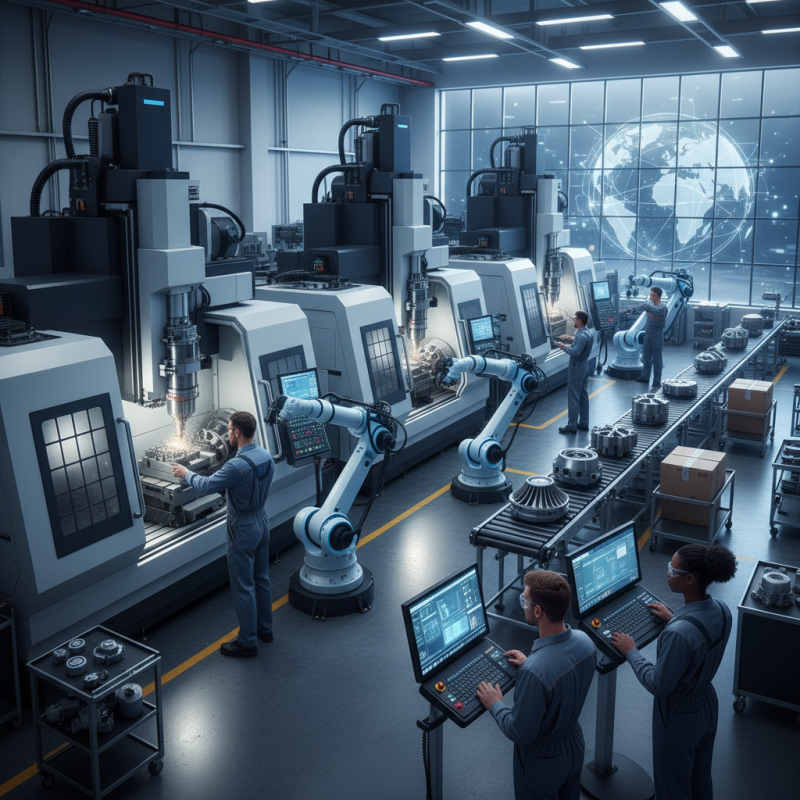
CNC machining plays a pivotal role in enhancing production efficiency for global supply chains. According to a report by Deloitte, 53% of manufacturers emphasize the need for efficient supply chains to remain competitive. CNC machining allows for precision and repeatability, reducing errors in production. This consistency ensures high quality and lowers waste, addressing a significant concern in manufacturing.
Cost savings are also a significant benefit. A study by the National Institute of Standards and Technology found that small changes in production processes can lead to up to a 20% reduction in operational costs. CNC machining supports these changes through rapid prototyping and the ability to modify designs quickly. It encourages innovation, enabling companies to respond to market demands swiftly.
However, challenges persist. Not all companies have access to the latest CNC technology. This gap can widen disparities in efficiency. Balancing automation with skilled labor is crucial, as not all tasks can be completed by machines. Continuous training for workers is essential but often overlooked, leading to inefficiencies. Such reflections highlight the need for strategic planning in adopting CNC machining within global supply chains.
CNC technology significantly impacts production cycle times across various industries. Traditional machining often requires manual adjustments and longer setups. In contrast, CNC machining automates these processes, leading to reduced downtime. This allows manufacturers to produce components more quickly and efficiently.
The precision of CNC machines enhances production quality as well. They minimize human error and ensure consistent tolerances. However, setting up CNC machines can be complex and may require skilled operators. This complexity sometimes leads to longer initial cycle times during training or setup phases. Yet, once these systems are optimized, the benefits often outweigh the initial challenges.
Global buyers are increasingly looking for ways to improve their supply chains. Faster production cycles can lead to quicker delivery times, enhancing customer satisfaction. Companies must reflect on the balance between initial setup costs and long-term efficiency gains. Embracing CNC technology requires an investment, but the potential for improved production efficiency is undeniable.
CNC machining significantly reduces production costs. According to a report by the National Institute of Standards and Technology, American manufacturers save an average of 30% in production costs through the adoption of CNC technologies. These savings arise from increased precision and reduced labor costs. Automated processes minimize human error, leading to fewer defects and lower rework rates.
In addition to cost savings, CNC machining enhances material utilization. A study from the Manufacturing Engineering Society indicates that optimized CNC processes can increase material efficiency by up to 20%. This reduction means less waste and fewer resources used, further cutting down operational expenses. However, switching to CNC technology can have initial setup costs that require careful consideration.
Many companies face challenges when transitioning. The learning curve for skilled operators is steep. Training staff to effectively use CNC machines may involve time and resources. Some organizations struggle to adapt, questioning if the savings justify the investment. Nevertheless, those that embrace CNC technology typically see long-term benefits that outweigh the initial hurdles.
CNC automation significantly improves quality in manufacturing. With precise control over machining processes, companies can achieve tighter tolerances and better surface finishes. This consistency leads to fewer defects in production. Global buyers benefit from reliable parts that meet stringent industry standards.
One area of improvement is in the speed of production. CNC machines operate quickly, which reduces lead times. However, transitioning to CNC can be challenging. Proper training for operators is essential. A well-trained team ensures that machines are used to their full potential. Regular maintenance checks can prevent costly downtime.
Tip: Always keep an updated maintenance schedule. It helps sustain the efficiency of CNC machines.
While CNC technology boosts production, it may require initial investments in equipment and training. It's essential to assess the long-term benefits. Investing in quality control measures during this transition will yield better results. Continuous feedback loops from operators can enhance processes further. These reflections help in refining production techniques.
CNC machining has transformed many industries, showcasing its potential through various success stories. In the automotive sector, for instance, one manufacturer improved part precision significantly. By integrating CNC technology, they enhanced production speed and reduced waste. Parts were produced with minimal human intervention, which lowered labor costs. However, implementing this technology wasn’t seamless. Challenges in training staff on new machinery arose, requiring time and resources.
In the aerospace industry, another case illustrates CNC machining's impact. A company faced strict regulations and high-quality demands. By adopting advanced CNC methods, they achieved tighter tolerances and quicker turnaround times. This led to more reliable components for aircraft. Yet, the transition involved unexpected setbacks in software compatibility. Continuous adjustments were necessary to optimize their processes. Such experiences highlight the need for careful planning and ongoing evaluation to maximize CNC machining benefits.
| Industry | Challenge | CNC Solution | Results |
|---|---|---|---|
| Automotive | High volume production with tight tolerances | Utilized multi-axis CNC machines for precision parts | Increased output by 30%, reduced waste by 15% |
| Aerospace | Complex geometries and stringent regulations | Adopted high-speed machining techniques | Accelerated production cycle by 25%, ensured compliance with standards |
| Medical Devices | Need for rapid prototyping and customization | Implemented CNC for customized components | Reduced time to market by 40%, improved product precision |
| Electronics | Demand for small, intricate parts | Employed CNC laser cutting for speed and accuracy | Enhanced production speed by 50%, cut costs by 20% |
| Heavy Machinery | High tooling costs and long lead times | Streamlined with CNC for part manufacturing | Decreased lead time by 35%, dramatically reduced tooling costs |
: CNC machining enhances production efficiency through precision and repeatability, ensuring low error rates and high-quality output.
It can reduce operational costs by up to 30% by minimizing errors and labor costs, thus lowering rework rates.
Yes, optimized CNC processes may boost material efficiency by up to 20%, reducing waste and resource consumption.
Initial setup costs and a steep learning curve for skilled operators can make the transition difficult for some organizations.
Yes, ongoing training is essential for workers to effectively operate CNC machines and prevent inefficiencies in production.
Yes, not all companies have equal access to the latest CNC technology, which may widen efficiency gaps in production.
Balancing automation with skilled labor is crucial since not all tasks can be completed by machines, demanding skilled oversight.
Companies need to weigh initial setup costs against potential long-term savings and benefits before making the switch.
Typically, yes; organizations that adopt CNC often find that the long-term advantages outweigh the initial difficulties.
Yes, companies can continually optimize CNC processes, leading to better efficiency and cost reductions in the long run.
CNC machining has become a pivotal technology in enhancing production efficiency for global buyers, offering numerous benefits across supply chains. One of the key advantages is how CNC machining improves production efficiency by significantly reducing production cycle times. This technology automates complex processes, enabling higher precision and consistency while minimizing human error.
Furthermore, CNC machining techniques lead to substantial cost reductions by optimizing material usage and reducing labor costs. Quality improvements are also notable, as CNC automation ensures that products meet stringent specifications and standards. Various case studies illustrate CNC machining success stories across diverse industries, showcasing its ability to transform manufacturing operations. Overall, the integration of CNC machining in production processes represents a strategic advantage for companies seeking to enhance their efficiency in a competitive global market.

Cora CNC